
News
Campaigns
Events
Books & Guides
About Us
Links

Welcome to the cider page of the Portsmouth and South East Hampshire branch of the Campaign for Real Ale - and if that sounds like a contradiction, well it isn't! For most of its existence, CAMRA has promoted traditional cider, initially by including it at beer festivals and by producing the 'Good Cider Guide'. We also have a branch Cider Pub of the Year. Details are on our News page.
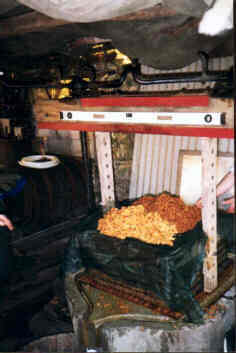
What is traditional cider? As with Real Ale, CAMRA has a definition of real or traditional cider. We regard a cider as traditional if it is made purely of apple juice, not concentrate, is not processed in any way and is not kept or served under any form of gas pressure. The apple juice can be from cider apples, as is usually the case with West Country cider, or from culinary and dessert fruit as is often the case with cider from Kent and East Anglia. It fact some traditional cider, particularly from larger commercial producers, is processed in some way, for instance with an added yeast being used for fermentation instead of the natural yeast, but it can still taste good.
What about perry? Perry is like cider, except that it's made from pear juice instead of apple juice. The main area for its production, as well as the growing of perry pear trees lies in the so-called three counties of Herefordshire, Worcestershire and Gloucestershire. Westons of Much Marcle in Herefordshire is probably the biggest producer of traditional perry in the world although there are, of course, many smaller producers. Real perry is a wonderful drink, delicate and refreshing, but it is not generally easy to find in our area outside of CAMRA festivals, and CAMRA is determined to do all it can to assist in its survival as a commercial product.
A history lesson. So where do these wonderful drinks come from? The origins of cider and perry making in this country are lost in the mists of time, but it is believed that they predate Christianity, and certainly predate that young upstart, hopped ale, by many centuries. The Roman and Norman invasions undoubtedly assisted the development of this ancient craft with the introduction of new varieties of apple tree, and northern French cider making expertise. Of course, for most of cider's history its production has been a domestic craft, particularly on farms where it was even used as part payment to labourers. Come the Industrial Revolution, however, all this changed. Small scale farm production continued, but in the 19th century factories became the main source of British cider and firms such as Coates, Gaymers, Merrydown, Taunton, Bulmers, Inch and Showering's became household names. Unfortunately, Britain's cider makers have demonstrated exactly the same predatory instincts as our brewers, and it will come as no surprise to learn that most of these firms have been taken-over and the factories closed down. There are now just 2 major producers in Britain, Bulmers and the U.S. owned William Clark, and they produce most of the cider you are likely to find in pubs and off-licences. They have never developed tied estates, but given their dominance of the business they don't need them and they are able to foist mainly processed, artificially carbonated ciders onto a public largely ignorant of the delights of real cider. Reasons to be cheerful All is not lost, however. The big producers are perfectly capable of producing decent traditional ciders if they want to, as do large independent factories like Westons and Thatcher's, and there are still many fine small craft producers of cider and perry all over the south of England and some points north.
Who makes it? There is a map detailing all Real Cider & Perry producers on the National CAMRA website.

